ET23SWE0038 - Double Duct Packaged Terminal Heat Pump Field Demonstration
The proposed project is a demonstration of an emerging high efficiency heat pump product for multifamily space conditioning applications. This project will demonstrate the application of Double Ducted Packaged Terminal Heat Pumps (DDPTHP) in a low-income multifamily new construction project in the PG&E service territory in Daly City, CA. The product can enable cost-effective electrification and energy efficient heat pump usage in multifamily buildings and lodging.
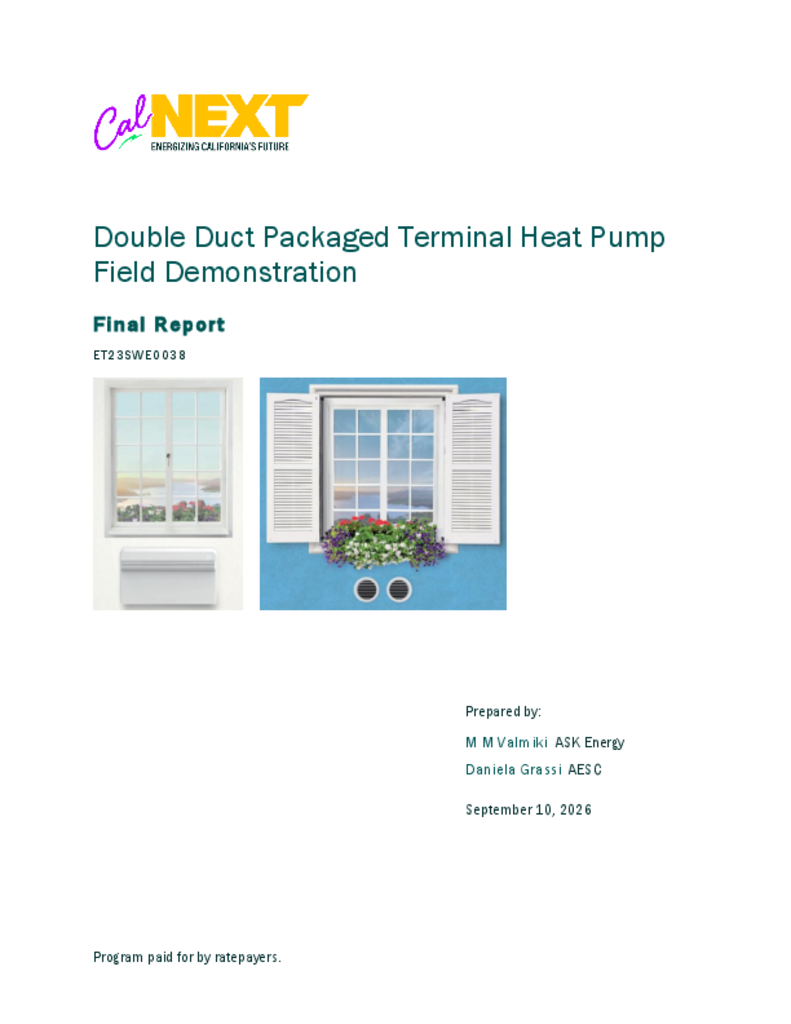
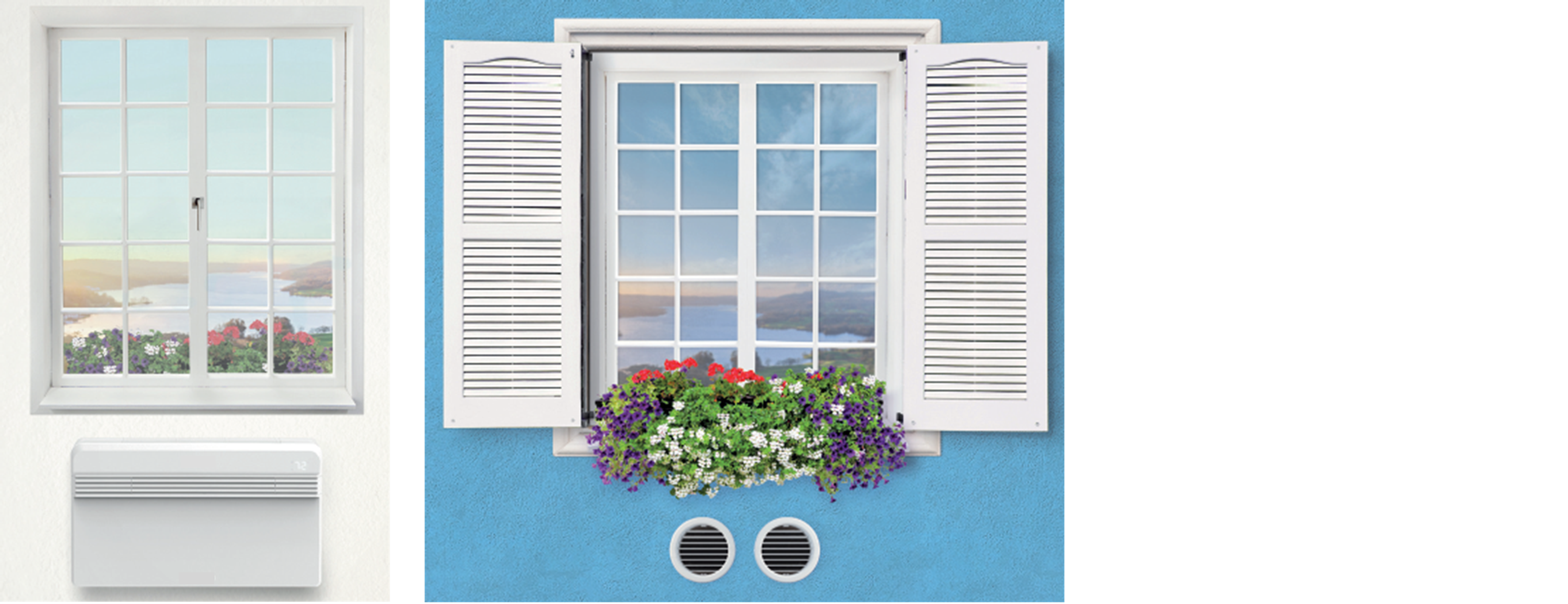
The DDPTHP product provides space heating and cooling in a single package for each apartment. This eliminates the on-site handling of refrigerants and refrigerant lines, simplifying and reducing installation costs and harmful refrigerant emissions. The DDPTHP products are installed inside the multifamily unit on a perimeter wall and rely on two 8” duct penetrations through the wall to provide air to the evaporator/condenser coils. This technology is an alternative to the products currently on the market including variable refrigerant flow (VRF), ductless heat pumps, and typical packaged terminal heat pumps (PTHPs).
The field study will monitor a sample of the units in the participating building following International Performance Measurement and Verification Protocol (IPMVP) guidelines for retrofit isolation with key parameter measurement. Analysis of the representative sample dataset will allow for normalized performance and conclusions for the statewide market. Costs, benefits, and contrasts to a baseline PTHP will be analyzed and quantified. Although the field demonstration will be conducted in a new construction building, recommendations and feasibility for retrofit applications will be discussed. Recommendations for program support, product roadmap, and best applications will be provided based on the study findings.
Many multifamily and light commercial buildings such as hotels use through-the-wall packaged terminal units as an affordable option for space heating and cooling. However, this product class is generally less efficient than other product types for distributed, ductless conditioning. A new type of packaged terminal heat pump with a more compact form factor and two small duct penetrations for outside air exchange is now available, possibly adding a premium efficiency option to this market niche.
Compared to past packaged terminal units, the “double duct packaged terminal heat pump” (DDPTHP) minimizes building envelope disruption, eliminates outside equipment, includes multi-speed and variable speed motors, eliminates electric resistance defrost, and can provide efficient, affordable electrification of heating. However, these efficiency benefits and product performance had not yet been previously validated. This project performed a field evaluation of the technology in four homes within a new construction, affordable housing multifamily building.
The project team monitored equipment energy usage and loads for six months at each site and used the data to compare its performance to an equivalently sized code-minimum packaged terminal unit baseline. The emerging technology’s performance was quantified in terms of energy savings, cost-effectiveness, and other impacts with energy savings of five to forty-three percent. The project also acquired some basic user and stakeholder feedback that relates to installation and product usage.
The emerging technology shows promise for convenient, affordable, and efficient electrified heating and cooling, including in retrofit scenarios. In parallel with other ongoing laboratory work, a modeling study of the technology should be done to establish savings across a range of California building types and climate zone conditions so that a rebate measure support workpaper can be established for heating and cooling efficiency and electrification programs.